
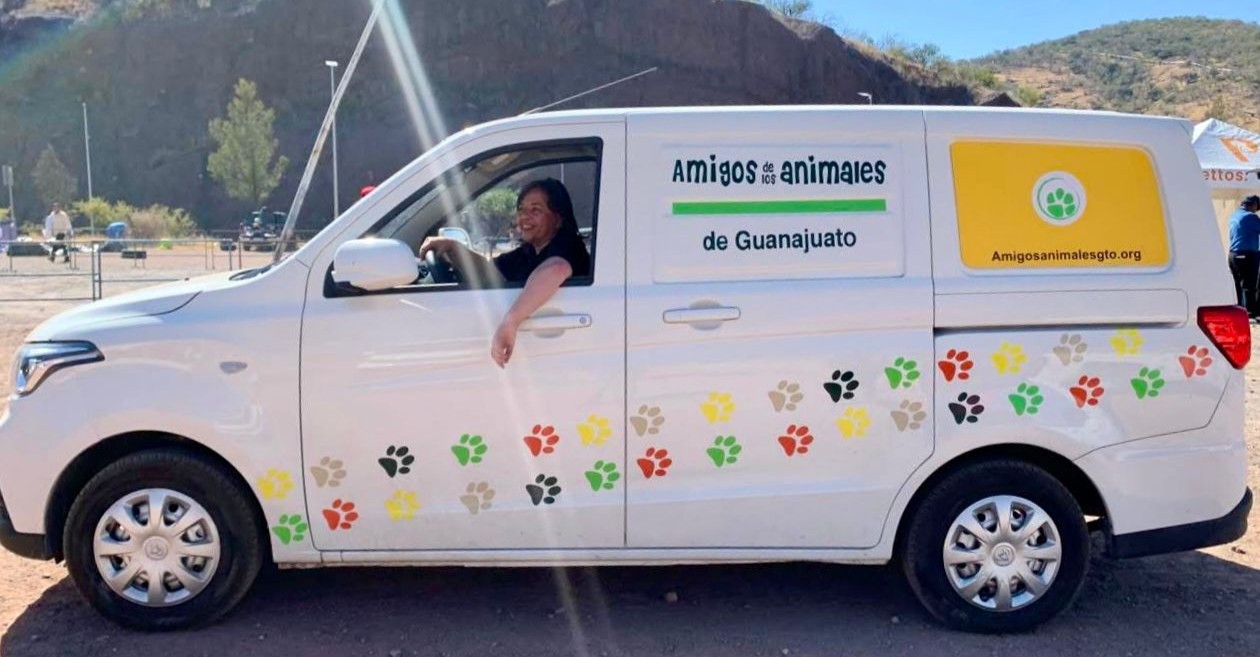
Our spay/neuter program
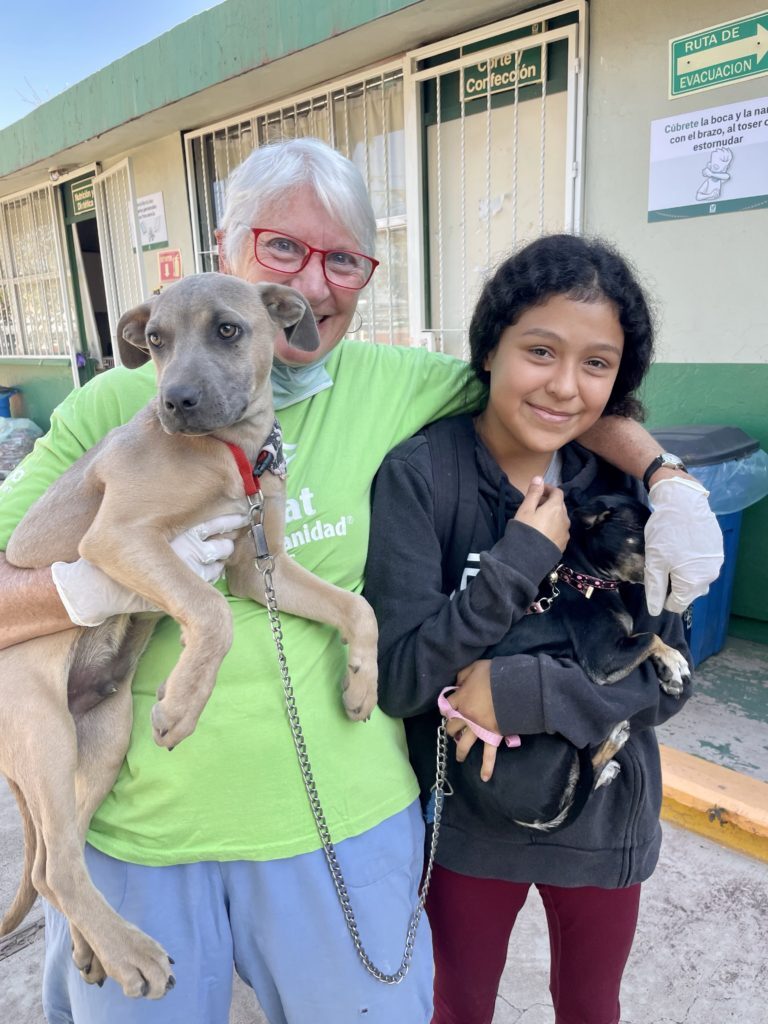
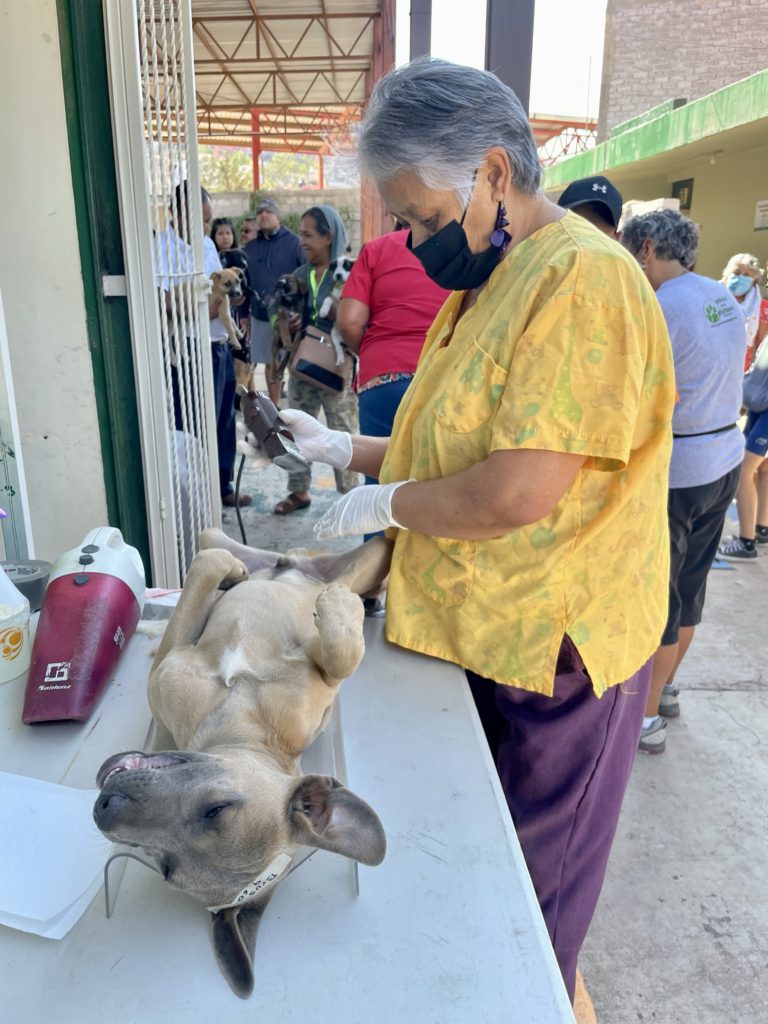
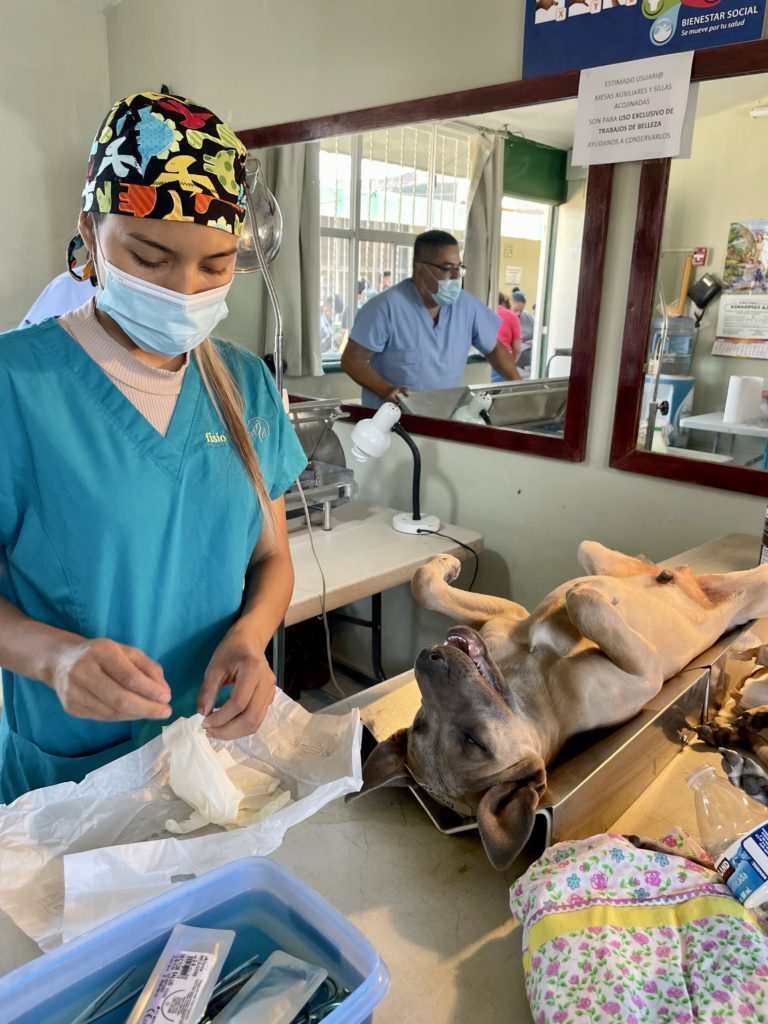
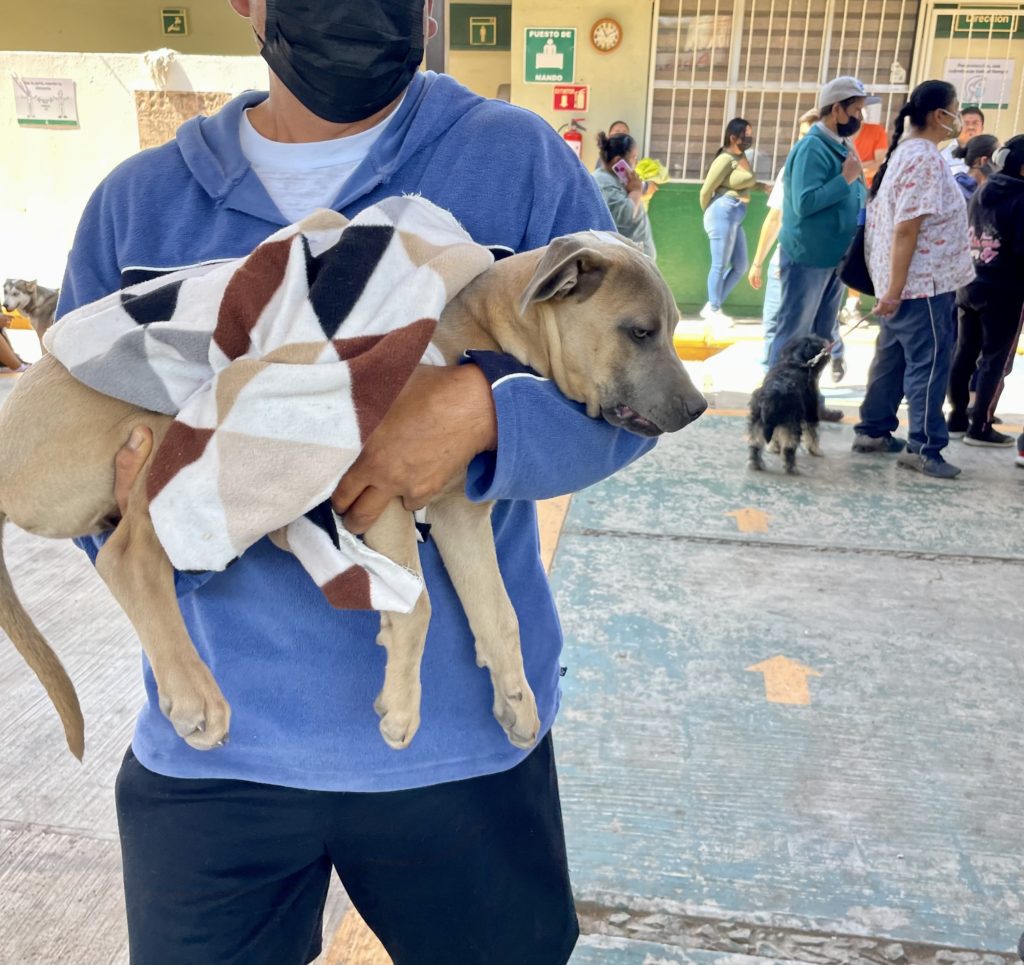
We provide low-cost spay/neuter services to residents throughout the municipality, including the city’s outlying villages. To date, more than 27,000 dogs and cats have been sterilized with our support. That support includes organization, veterinary services, medical equipment and supplies, and assistance from volunteers.
Sterilization campaigns are held twice each month. Pet owners are asked to make a small contribution to help cover our costs, but those unable to pay receive the service free of charge.
Our sterilization data
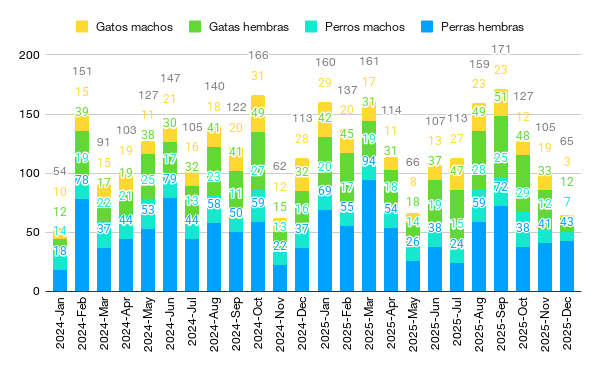
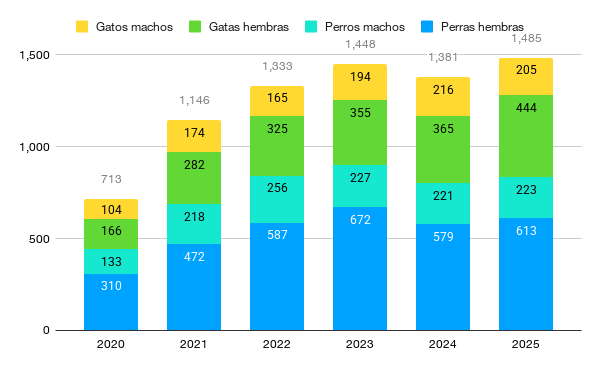
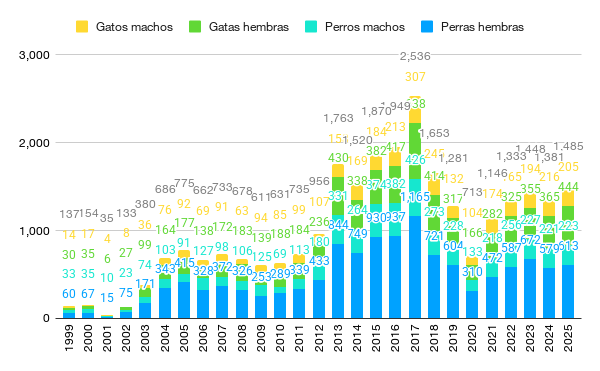

| Year | Perras hembras | Perros machos | Gatas hembras | Gatos machos | Perros | Gatos | Total |
|---|---|---|---|---|---|---|---|
| 2025 | 613 | 223 | 444 | 205 | 836 | 649 | 1,485 |
| 2024 | 579 | 221 | 365 | 216 | 800 | 581 | 1,381 |
| 2023 | 672 | 227 | 355 | 194 | 899 | 549 | 1,448 |
| 2022 | 587 | 256 | 325 | 165 | 843 | 490 | 1,333 |
| 2021 | 472 | 218 | 282 | 174 | 690 | 456 | 1,146 |
| 2020 | 310 | 133 | 166 | 104 | 443 | 270 | 713 |
| 2019 | 604 | 228 | 317 | 132 | 832 | 449 | 1,281 |
| 2018 | 721 | 273 | 414 | 245 | 994 | 659 | 1,653 |
| 2017 | 1,165 | 426 | 638 | 307 | 1,591 | 945 | 2,536 |
| 2016 | 937 | 382 | 417 | 213 | 1,319 | 630 | 1,949 |
| 2015 | 930 | 374 | 382 | 184 | 1,304 | 566 | 1,870 |
| 2014 | 749 | 264 | 338 | 169 | 1,013 | 507 | 1,520 |
| 2013 | 844 | 331 | 430 | 158 | 1,175 | 588 | 1,763 |
| 2012 | 433 | 180 | 236 | 107 | 613 | 343 | 956 |
| 2011 | 339 | 113 | 184 | 99 | 452 | 283 | 735 |
| 2010 | 289 | 69 | 188 | 85 | 358 | 273 | 631 |
| 2009 | 253 | 125 | 139 | 94 | 378 | 233 | 611 |
| 2008 | 326 | 106 | 183 | 63 | 432 | 246 | 678 |
| 2007 | 372 | 98 | 172 | 91 | 470 | 263 | 733 |
| 2006 | 328 | 127 | 138 | 69 | 455 | 207 | 662 |
| 2005 | 415 | 91 | 177 | 92 | 506 | 269 | 775 |
| 2004 | 343 | 103 | 164 | 76 | 446 | 240 | 686 |
| 2003 | 171 | 74 | 99 | 36 | 245 | 135 | 380 |
| 2002 | 75 | 23 | 27 | 8 | 98 | 35 | 133 |
| 2001 | 15 | 10 | 6 | 4 | 25 | 10 | 35 |
| 2000 | 67 | 35 | 35 | 17 | 102 | 52 | 154 |
| 1999 | 60 | 33 | 30 | 14 | 93 | 44 | 137 |
| Total | 12,669 | 4,743 | 6,651 | 3,321 | 17,412 | 9,972 | 27,384 |
Why do we focus on sterilization?
There are not enough homes for all the puppies and kittens that are born in our city. Too many dogs and cats end up on the streets, where they are exposed to hunger and thirst, disease, mistreatment, injury, and early death. An adoption saves one life, whereas spay/neuter saves thousands of lives.
What is sterilization?
Sterilization is a surgical procedure to remove the ovaries and uterus if an animal is a female, or the testes if it is a male.
What are the benefits of sterilization?
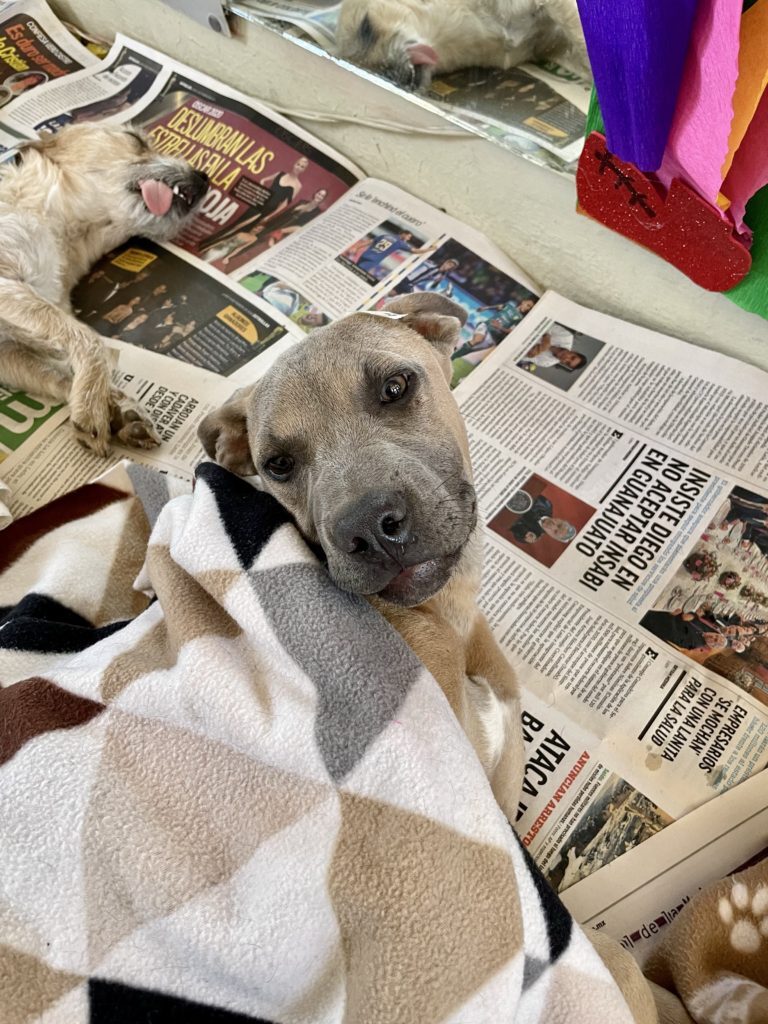
Sterilizing pets prevents females from going into heat and reduces male behavioral problems such as fighting and urinating to mark territory. By preventing venereal tumors and other diseases that are common among intact dogs and cats, sterilization increases pets’ chances of living a long and healthy life. Finally, it reduces the number of unwanted pets in the community. Strays not only are at risk of injury, disease, and early death, but also pose health and safety hazards to humans.
How do I schedule my pet to be sterilized?
If you would like to sterilize your dog or cat, check our Facebook page for sterilization campaign announcements and instructions. Campaigns are announced one to two weeks prior to the event and are handled on a first come, first served basis; no appointments are taken.
What is the cost?
We request $150 pesos (approx. US $8) per animal for this procedure. Any additional amount is greatly appreciated, as the average cost to us is $500 pesos per case.
What about rescue?
Our volunteers all engage in rescue to one degree or another. But there are far more animals in need of rescue than resources available. That is why Amigos focuses on sterilization. In our 23-year history our 27,000+ sterilizations have reduced the number of unwanted, unloved street animals—likely by a million or more. We are not a rescue organization, and we have no facility to house animals.
If you are moved to rescue an animal, here are some options that may be helpful:
Independent rescue: You can take a dog or cat needing help to a local veterinarian, but not all veterinarians in the city will accept animals for adoption. If so, you’ll be expected to pay …unless you can provide foster care yourself.
Rescue organizations: The following organizations and groups have rescue as their mission, but most have no physical facilities. Those that do are at maximum capacity and cannot accept more animals for adoption.
- Adopta Guanajuato, a virtual adoption center that connects rescuers with independent adopters
- Fundación Corazón Animal, a private shelter located in the village of Cajones
- Pet Lovers of Guanajuato, a Facebook group connecting people with pets
- Tlacuatzín Rescue Guanajuato Capital
- Centro de Control Animal (the city’s animal control center), Calle Arboledas S/N, Colonia Arroyo Verde (Tel. 473 733 4839). Animals taken there will be held for a few days and euthanized if not adopted during that period.
Euthanasia to end suffering: If you find a gravely ill or injured animal, we suggest you take it to the Centrol de Control y Asistencia Animal (CECAA), located at Calle Arboledas S/N, Colonia Arroyo Verde, tel. 473 733 4839.